
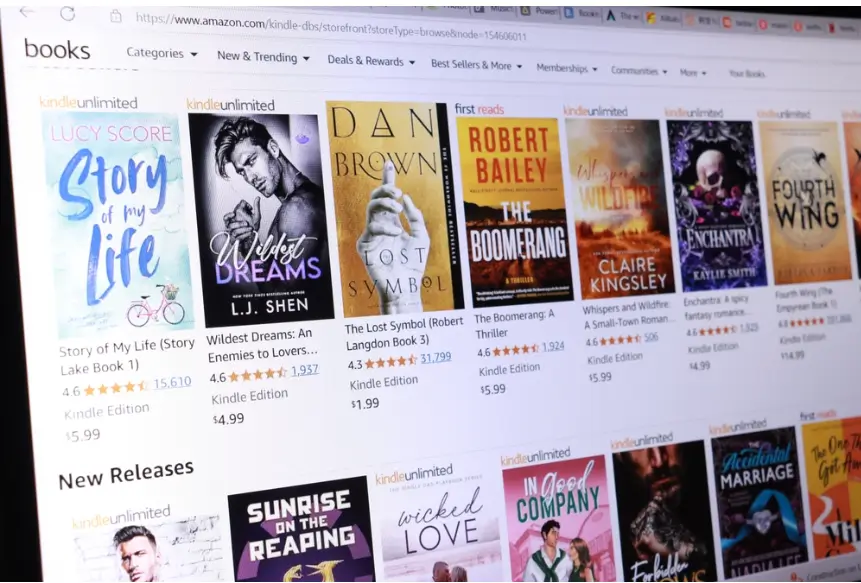
If your goal is to find the best self-publishing platform to reach major retailers, success usually comes from combining strong preparation, strategic distribution, and ongoing optimization. Whether you are publishing an ebook, a paperback, a hardcover, or all three, understanding how online book publishing sites work can help you maximize your reach without sacrificing quality.
Prepare Your Manuscript and Files for Publishing
Your manuscript should meet professional publishing standards before uploading to any platform. Even if major retailers and distributors accept technically incomplete files, poor formatting, editing issues, or production errors can hurt customer reviews, trigger returns, or lead to avoidable revisions, damaging your reputation as an author and limiting your long-term sales potential.
Professional editing should come first. Developmental editing, copyediting, and proofreading each serve a purpose. A polished manuscript protects your reputation and improves the reader experience.
Next, prepare the files according to the format. For ebooks, the standard file format is EPUB, which is compatible with major retailers and digital reading devices. For print books, you need a print-ready PDF, meaning a specialized file designed to meet printer specifications, including:
- Correct trim size
- Proper bleed settings
- Safe margins
- Embedded fonts
- High-resolution images
- Clean page numbering
- Correct line spacing
Authors should also validate files before publishing. Preview tools like KDP Previewer can identify broken chapter breaks, spacing issues, missing fonts, or image distortions before readers ever see them.
Required Publishing Files
| Description | Purpose | Recommended File Type |
|---|---|---|
| Ebook interior | Ebook distribution | EPUB |
| Print interior | Paperback or hardcover printing | Print-ready PDF |
| Cover file | Ebook display | JPEG/TIFF |
| Full wrap cover | Paperback or hardcover printing | |
| Author bio | Metadata and marketing | DOCX or text |
| ISBN | Metadata and marketing | Assigned number |
Taking the time to thoughtfully prepare your manuscript files reduces revisions, improves retailer and reader approval, and creates a smoother publishing experience all around.
Create Professional Metadata and Cover Design
Discoverability is the next major priority once your book files are complete.
Metadata is information that describes your book’s content to help retailers and readers identify, categorize, and surface your book online. Strong metadata improves search visibility within self-publishing distributors and helps retailers place your title in relevant categories.
Core Metadata Elements
| Metadata Element | Purpose |
|---|---|
| Title & subtitle | Spark interest, improve discoverability and relevance |
| Author name | Brand recognition |
| Book description | Persuades buyers and improves conversions |
| BISAC Category Codes | Proper shelving and classification |
| Keywords | Helps search ranking, especially on Amazon |
| ISBN | Unique retail identification |
| Publication date | Release tracking |
The book description deserves special attention. It should quickly communicate the stakes, value, emotional resonance, and reader benefit.
Then there is cover design.
Readers often make purchase assumptions within seconds, making cover design one of the most important tools in publishing. Your cover should align with genre expectations while being distinctive enough to capture attention and appealing enough to make a reader pick it up.
Best practices for good cover design include:
- Clear typography
- High contrast readability
- Genre-appropriate design
- Strong thumbnail visibility
- Balanced spacing
- Professional imagery or illustration
For print books, you must account for the front and back covers and the spine. Each platform will specify the resolution, dots per inch (DPI), and bleed.
Many tools and professional services are available to help authors design a compelling cover that aligns with genre expectations and stands out on the shelves. Professional cover design is an investment that often pays off.
It should be noted that metadata and cover design are not static elements. Analytics, sales trends, and reader feedback often reveal opportunities for refinement, allowing you to improve your positioning and sales.
Choose the Right Online Publishing Platforms
Choosing the right platform for your book often determines how widely it is distributed, how much control you retain, and how much administrative work you manage.
Most publishing platforms fall into three categories:
- Retailers
- Aggregators
- Full-service publishing companies
Retailers
Retailers allow direct upload and distribution within a single marketplace. Examples include:
- Amazon KDP
- Apple Books
- Kobo Writing Life
- Barnes & Noble Press
- Google Play Books
Uploading directly to a retailer gives authors stronger control, allows them to set direct promotions, and often offers better royalties. However, it requires authors to manage each retailer listing and relationship individually.
Aggregators
Aggregators allow one upload that distributes to multiple retailers and library systems.
Examples include:
- Draft2Digital
- PublishDrive
Both Draft2Digital and PublishDrive focus on ebooks. IngramSpark, another aggregator, specializes in broad distribution of print to bookstores, libraries, and retailers.
Aggregators significantly reduce setup time and expand reach, but authors can often expect slightly lower royalties or to pay a subscription fee.
Full-Service Self-Publishing Companies
Full-service publishing companies support authors through editing, formatting, design, production, and distribution.
For authors who want professional publishing quality while retaining more control than traditional publishing typically offers, this route can reduce complexity. Authors should expect to pay package, subscription, or a la carte service fees.
Platform Comparison
| Platform Type | Best For | Reach | Effort Level |
|---|---|---|---|
| Direct retailer upload | Greatest control and highest direct royalties | Single retailer or platform; global with certain platform options | High |
| Aggregator | Wide distribution | Multiple retailers and library systems; some global reach | Medium |
| Full-service publisher | Support and professional guidance | Broad distribution | Lower |
While it may be tempting to focus on a single platform to list your books, there is no single best self-publishing platform for reaching major retailers. Most authors choose a “going wide” strategy, distributing across multiple retailers. Many authors list directly with major retailers—especially Amazon, Apple Books, Kobo, and Barnes & Noble—while using aggregators to list their titles more broadly.
This approach reduces dependence on specific online book publishing sites and expands access for readers who get their books through Apple, Kobo, Barnes & Noble, Google, or their local library.
Set Up Accounts with Major Retailers and Aggregators
Once you’ve established your distribution strategy, it’s time to start creating your self-publishing distributor accounts.
Most online publishing sites require:
- Legal name
- Business or author information
- Tax details
- Payment information
- Bank account setup
- Identity verification
- Publishing rights confirmation
Authors who want to maintain maximum control over their titles will often focus on direct uploads to major retailers, including Amazon KDP, Apple Books, Kobo, Barnes & Noble Press, and Google Play Books. This strategy often offers access to retail-specific promotional tools and allows authors to manage pricing, distribution, and royalties more closely.
Many authors also add an aggregator account, allowing them to extend into secondary markets such as library systems, subscription platforms, smaller retailers, and international marketplaces. Aggregators charge a fee, either as a subscription (PublishDrive) or as a percentage of sales (Draft2Digital).
For print distribution, many authors pair the widespread availability enabled by Amazon KDP print-on-demand (POD) with wholesale catalog access through IngramSpark, ensuring that their print titles are available to bookstores and libraries.
To set up your distribution accounts:
- Finalize your files, using the platform’s formatting guidelines as a reference
- Register your ISBNs. Every format (paperback, hardcover, ebook) should have a unique ISBN, which can be used across multiple platforms.
- Upload to major retailers.
- Add an aggregator account if going wide
- Enable print distribution
- Review proofs
- Publish your book
- Monitor performance, making adjustments to metadata and cover art as needed
Publish Your Book and Optimize Distribution
Every decision you make before clicking “publish” influences your visibility and earnings. Distributor choice, ISBN assignment, pricing, and program participation can all impact your book’s discoverability and the royalties you earn.
ISBNs
An ISBN, or International Standard Book Number, identifies your book across retailers, wholesalers, and library systems. Separate ISBNs may be required for ebooks, paperbacks, hardcovers, and audiobooks.
Purchasing your own ISBNs from Bowker helps to ensure that you have full control over your book’s unique identifiers. Using a platform-assigned ISBN can limit how and where you distribute your titles.
Exclusive vs. Wide Distribution
Some authors cast a wide net, listing their titles anywhere—and on any site—that they can. Others choose exclusivity programs tied to a single retailer. Going wide increases access, while exclusivity may offer stronger internal visibility and promotional incentives.
Knowing your audience and your publishing goals is key to determining the right strategy for you. Romance readers, for example, may churn through several books a month, which makes Kindle Unlimited a good place for those books, even with the exclusivity required by KDP Select.
For more niche topics, print wholesalers can improve orderability through bookstore and library catalogs, though shelf placement is never guaranteed.
Pricing and Royalty Strategy
The pricing of your book should reflect its genre, quality, and format. You will receive a percentage of every book sold, typically after printing costs and retailer fees.
Direct uploads often preserve higher margins. Aggregators simplify logistics, while taking a percentage of royalties or charging subscription fees. Selling through aggregators typically reduces royalties by approximately 10%, though rates may vary.
| Step | Focus |
|---|---|
| Research genre pricing | Stay competitive in the genre |
| Review retailer royalty models | Protect your margins |
| Compare direct vs. aggregator payouts | Maximize earnings |
| Evaluate discounting | Increase visibility through wholesale channels |
| Test pricing | Improve conversions and increase sales |
Promote Your Book and Track Performance
Publishing online does not automatically mean that people can—or will—find your book. Promotion matters, especially for self-published books.
Start with your product page, looking at the details shared by each retailer:
- Do you have a strong description of your book?
- Is your pricing competitive?
- Are your categories intuitive and clean?
- What do reader reviews say?
- Do you note any awards or endorsements?
- How strong is your author branding?
Once your book listings are ready, you can expand your reach through active promotion.
Key Promotional Tactics
Promotion strategies for self-published books take many forms, each with unique benefits.
| Promotional Tactics | Benefit |
|---|---|
| Email newsletter | Direct reader communication and retention |
| Social media | Awareness and community-building |
| Paid ads | Targeted reach |
| Review campaigns | Social proof to support your book |
| Discounts | Visibility boosts |
| Book launch partnerships | Expanded audiences |
| Universal book links | Easier cross-platform buying |
Analytics can help evaluate the success of these promotions and your book sales, with data on click-through and conversion rates, sales by retailer, geographic performance, pricing, and keyword traction. Using this data can help you to refine promotional strategies, improve discoverability, and strengthen long-term sales performance across retailers..
Don’t underestimate the power of your own platforms. Authors who sell directly from their own websites may also gain stronger margins, faster payouts, and valuable reader data.
At Page Publishing, strategic guidance often matters most. Distribution is strongest when production quality, retailer requirements, and marketing decisions align from the beginning. Our advisors can help you find the best self-publishing platform to reach major retailers.
Frequently Asked Questions
What do I need before publishing my book online?
To publish online, you need a complete, professionally edited manuscript, a high-quality cover design, and properly formatted interior files for ebook and/or print distribution.
How do I publish on Amazon Kindle Direct Publishing?
To publish on Amazon KDP, create a free account, upload your manuscript and cover, enter your book’s metadata, select categories and pricing, preview your book, and click publish.
How can I efficiently distribute my book to multiple retailers?
The most efficient way to reach many retailers is to combine direct uploads to top stores with an aggregator, which distributes your book to additional online retailers and libraries.
What are the best ways to get my print book into bookstores?
The best approach is to publish through both KDP Print (for Amazon availability) and a print wholesaler like IngramSpark, which lists your book in catalogs that bookstores use to order titles.
How should I market my book after publishing?
Effective marketing starts with a compelling book description and competitive pricing; you should also encourage reviews, use social media, and run targeted promotions to attract readers.
