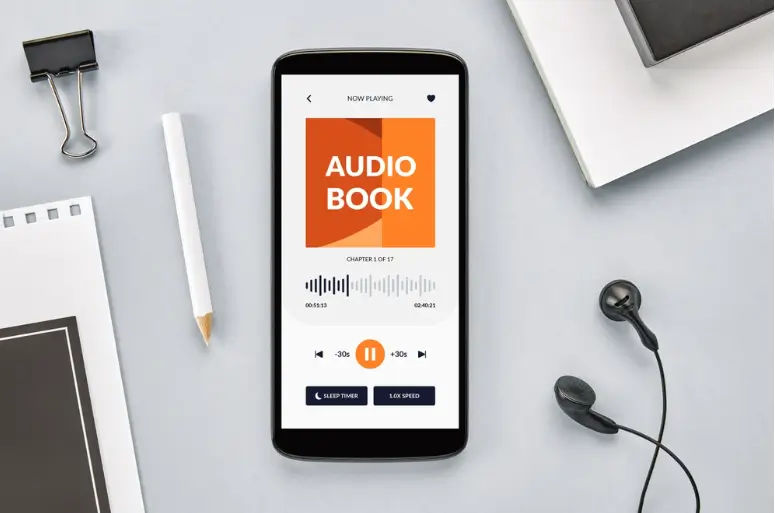
Once considered a niche publishing format, audiobooks have become one of the fastest-growing segments of the book industry. Readers are listening during commutes, workouts, chores, and travel, giving independent authors the opportunity to reach audiences beyond traditional ebooks and print books.
The good news is that you no longer need a major publisher to produce a professional audiobook. With the right preparation, equipment, and self-distribution strategy, self-published authors can create high-quality productions that compete alongside traditionally published titles.
Here’s everything you need to know about self-publishing an audiobook, from preparing your manuscript to marketing your finished recording.
Overview of the Audiobook Industry
Audiobook sales have grown steadily over the past decade as smartphones and streaming services have made listening easier than ever. Audiobooks appeal to a broad range of readers, from commuters and travelers to busy parents and anyone else who enjoys reading while multitasking.
With more than 750,000 active titles available, the Audio Publishers Association reported $2.43 billion in audiobook sales in 2025. Their 2025 report, produced in partnership with Edison Research, found that 51% of American adults have listened to at least one audiobook, with even more adults expressing interest. Daily listeners have more than doubled since 2016, showing the rapid growth of the format.
Libro.fm reports that general fiction makes up the largest segment of audiobook sales, but children’s and young adult literature, science fiction, and fantasy are rapidly growing. Women are more likely to listen than men, and younger Americans (under 50 years old) are more likely to choose the format than older adults.
For independent authors, this growth represents a potential new revenue stream without requiring an entirely new book. If you’ve already published an ebook or paperback, producing an audiobook allows you to monetize the same content while reaching a different audience.
Prepare Manuscript for Audiobook Production
A manuscript that reads well on paper isn’t always one that sounds natural when spoken aloud.
Before you start recording, read your book out loud or run it through text-to-speech software from start to finish. As you listen, make note of awkward sentences, repeated words, confusing transitions, or paragraphs that feel much longer when heard than read.
It helps to trim unnecessary words whenever possible. Long descriptions, excessive dialogue tags, and repetitive phrases can slow the pace of an audiobook. Clear, conversational writing usually translates better to audio.
It’s also helpful to add pronunciation guides directly into your working manuscript. Include notes for unusual names, foreign words, fictional locations, or technical terminology. You can also add simple pacing reminders, such as:
- Pause
- Emphasize
- Slow down
- Smile during delivery
These cues make recording sessions smoother and help maintain consistency across multiple days of narration.
Choose Between Narrating Yourself or Hiring a Professional
One of the biggest decisions you’ll make in producing an audiobook is whether to record it yourself or hire a professional narrator.
Narrating your own audiobook works well if:
- You’re comfortable speaking for extended periods of time.
- Your book is nonfiction, memoir, or educational.
- Readers expect to hear your personal voice.
- You have the time to learn audio production.
Many nonfiction authors build stronger connections with readers by narrating their own books, especially when sharing personal experiences or professional expertise.
Professional narrators, however, bring pacing, acting ability, consistency, and technical experience that can significantly improve the listener experience.
Professional narration is often worth the investment if:
- Your novel requires multiple character voices.
- You dislike recording yourself.
- You want broadcast-quality performance.
- Your schedule doesn’t allow weeks of production work.
Timing is an important consideration. Recording an audiobook takes more time than most first-time authors expect. A finished hour of audio (typically around 10,000 words) often takes three to six hours to record, edit, and master. A ten-hour audiobook may require 40-60 hours of production work in total.
When hiring a professional, you can expect to pay between $150 and $450 per finished hour. That means a ten hour audiobook will typically cost between $1,500 and $4,500 to produce professionally.
Narrate In Your Own Voice
If you decide to narrate your own book, preparation is just as important as your recording equipment.
Start by recording a 15-minute sample chapter in your chosen style. Play it back and listen critically for pacing, vocal energy, pronunciation, and clarity. Reading aloud often feels different than speaking naturally, so don’t expect perfection on your first attempt.
Spend several days practicing before launching the full project. Daily reading exercises improve rhythm, consistency, and confidence behind the microphone. You should also test your vocal stamina. Try reading continuously for an hour to determine whether your voice remains steady without becoming strained or tired.
Hydration, proper posture, and frequent breaks can make a noticeable difference during long recording sessions.
Hire a Professional Narrator
If you decide to hire a professional narrator for your audiobook, finding the right voice is an important decision.
Platforms like ACX and Voices allow authors to post casting calls describing their book, target audience, preferred vocal style, and expected timeline. You can invite several narrators to audition using the same sample passage. Hearing identical text performed by different voices makes it much easier to compare and to choose the right narrator for your book.
You should also review each narrator’s previous audiobook work. Experience within your genre matters. A narrator who excels with romance novels may not be the best choice for business books or fantasy.
Before production begins, finalize every major term in writing, including:
- Payment structure
- Delivery schedule
- Number of revision rounds
- Ownership rights
- Distribution rights
Clear contracts are critical to reduce misunderstandings later in the production process.
Record and Produce a Finished Audiobook
Audiobook recordings typically take several sessions to complete. The longer the book, the more sessions you’ll need. Each session should stop before the narrator becomes tired or voice quality degrades.
Choose a recording location that minimizes outside noise and echo. Some authors build simple home recording booths using acoustic panels, blankets, or portable isolation shields, while others rent professional studio space. Many public libraries and local makerspaces offer free or low-cost access to professional audio equipment and spaces.
Make sure you maintain the same microphone position and speaking distance throughout each session. Small changes in placement can create noticeable differences in volume and tone between chapters.
Each chapter should be recorded as a separate audio file. This simplifies editing, revisions, and retailer uploads.
It can be helpful to keep a recording log during each session. Whenever you stumble over a sentence or mispronounce a word, note the timestamp. These markers make it much easier to return later to replace or remove the audio without searching through hours of audio.
Edit, Master, And Prepare Files For Publishing
Editing is where a raw recording becomes a polished audiobook.
Start by removing unwanted breaths, long pauses, repeated words, and obvious mistakes. Eliminate mouth clicks, background sounds, and other distractions that interfere with the listening experience.
Next, apply equalization (EQ) to improve vocal clarity. Gentle EQ adjustments can improve clarity, making narration sound more natural and easier to understand. Compression also helps maintain consistent volume levels throughout the recording so listeners don’t need to constantly adjust their playback volume.
Once editing is complete, export your master files using the audio specifications required by your chosen retailers. Always verify each platform’s technical requirements before uploading. Most platforms request high-quality WAV files before converting them to their own distribution formats.
Cover Design and Metadata
Audiobook artwork is a little bit different from ebook and paperback covers. Each platform may vary in the pixel requirements for upload, but retailers typically require square artwork rather than rectangular book covers.
You’ll want your cover to be easily recognizable even as a thumbnail and to remain visually consistent with your ebook and print editions. But one addition you may want to consider is your narrator’s name. Professional narrators often appreciate visible credit, especially if they have an established following. Some may even require cover credit as part of their contract. If not, some authors credit narrators only in the metadata, while leaving the artwork clear.
Finally, you will want to ensure that all metadata is complete and accurate, including:
- Title
- Author
- Narrator
- Description
- Language
- Genre
- Copyright information
- ISBNs
Your description should be customized to the audiobook rather than copied word-for-word from print book listings. Include details about the listening experience and mention any unique features of the narration if appropriate.
Choose Distribution Platform
Several platforms allow independent authors to publish audiobooks, each with different royalty structures and distribution options.
- ACX: One of the most well-known services, especially for reaching Audible and Amazon customers. Offers exclusive and non-exclusive distribution options, each with different royalty rates. In 2026, ACX introduced a new royalty model based on listening hours for audiobooks distributed through Audible.
- Voices by INaudio (formerly Findaway Voices): Distributes to numerous retailers and libraries, giving authors broader reach across multiple listening platforms. With no upfront setup or distribution fees, authors receive 80% of net royalties on a la carte sales.
- Spotify for Authors: Allows direct streaming of audiobooks through the Spotify platform. Authors receive a 50% royalty on the suggested retail price for a la carte purchases.
As with print books, some authors choose to distribute directly through individual retailers or to use an aggregator to reach multiple retailers through a single platform. Each has its benefits and trade-offs, and authors should consider:
- Distribution reach
- Royalty percentages
- Upfront costs
- Exclusivity requirements
- Marketing opportunities
To ensure smooth distribution, it’s also important to follow each platform’s upload checklist, including audio quality standards, chapter organization, metadata, and cover specifications.
Pricing, Royalties, and Rights
Audiobook pricing varies widely based on finished listening time, genre, and market norms. It can be helpful to review similar books in your genre to decide the best MSRP for your audiobook. Longer audiobooks typically command higher retail prices, and subscription services may pay authors differently than traditional retail sales, as listeners aren’t purchasing individual titles.
Authors also need to decide whether to take an exclusive or non-exclusive approach to distribution. Non-exclusive distribution provides greater flexibility and broader market access, though royalty rates may vary. It’s helpful to estimate your expected royalty earnings under each model before you decide.
Exclusive agreements often offer higher royalty rates but limit where your book can be sold. The exclusive option through ACX, for example, limits distribution to Amazon, Audible, and Apple Books, but offers 50% royalties vs. the 30% non-exclusive rate.
Legal, Contracts, and Creative Control
If you’re working with a publisher or production company, carefully review your contract to ensure you retain audiobook rights whenever possible. Audio rights have become increasingly valuable, and maintaining ownership gives you greater flexibility for future editions, licensing opportunities, and international distribution.
Written agreements protect both authors and narrators. Your contract should clearly define:
- Payment terms
- Production timeline
- Delivery expectations
- Ownership of recordings
- Revision process
- Final approval responsibilities
Include language covering correction rights so mistakes discovered after publication can be fixed without unnecessary disputes. It’s also wise to specify how recordings may be used beyond the audiobook itself. If promotional clips, translations, or derivative works are possible, define those permissions in advance.
Whenever possible, preserve final creative approval over the finished audiobook so your vision remains intact.
Marketing, Promotion, and Listener Engagement
Publishing your audiobook is only the beginning. Marketing your book is essential to its success.
Many authors offer a free sample chapter on their website in exchange for email signups. This gives potential listeners a chance to hear the narration while helping you build a mailing list that you own.
If your book already exists in print or ebook format, bundle promotions across multiple editions. Readers who enjoyed one version of the book often purchase another for convenience.
Encourage your narrator to participate in promotion as well. Many professional narrators share behind-the-scenes videos, recording sessions, or launch announcements with their own audiences.
Temporary discounts, consistent social media promotion, and exclusive offers are great ways to not only increase your book’s reach but grow your email list throughout launch. Owned marketing channels provide long-term value that isn’t dependent on changing social media algorithms or the features of a particular retailer.
Post-Publication: Monitor Performance and Update the Finished Audiobook
Successful audiobook publishing doesn’t end on launch day. Regularly review your sales, downloads, and platform analytics to identify trends. Weekly monitoring allows you to evaluate marketing campaigns and adjust your promotional strategy as needed.
Make sure you also pay close attention to listener reviews. While not every suggestion requires action, recurring comments about pronunciation, audio quality, or pacing may indicate opportunities for improvement. If you discover technical errors after publication, update the affected audio files as soon as possible. Many distribution platforms allow corrected uploads.
For older titles, you may even choose to release a revised edition with improved mastering or updated narration, extending the life of your audiobook and giving listeners another reason to revisit your work.
Bring Your Story to Life Through Audio
Audiobooks give authors an opportunity to extend the life of their books, reach new audiences, and create an additional long-term revenue stream. Whether you narrate the book yourself or hire a professional audiobook narrator, thoughtful planning and high production standards can help create an experience listeners enjoy from beginning to end.
By preparing your manuscript carefully, choosing the right production approach, protecting your rights, and investing in smart marketing, you can publish an audiobook that expands your audience while creating another valuable source of long-term book revenue.
