Foreword, Preface, or Introduction: What Goes Where

Foreword, Preface, or Introduction: What Goes Where

Close-up of the word

The foreword, preface, and introduction each serve a different purpose in a book’s front matter. A foreword is written by someone other than the author, typically to endorse the book and establish its credibility. A preface, written by the author, provides context for why and how the author wrote the book. An introduction extends your book’s content by establishing its primary thesis, outlining its scope, and telling your readers what to expect as they transition into the main text. None of the three is required.

Before your readers reach the first chapter of your book, they may encounter several pages of text that introduce you and your work, provide context, or offer insight into your motivation and process. These preliminary pages, often called front matter, help establish your credibility, orient your readers, and prepare them for what follows, whether that is a compelling story or a thorough examination of a subject.

Which Front Matter Sections Does Your Book Need?

Although authors can include all three sections in their book’s front matter, not every book needs them. Too many preliminary elements can slow readers down and dampen their interest instead of drawing them into the core material.

As you write your book and prepare for publication, you will want to consider your book’s purpose and audience to decide which sections, if any, will best introduce your book and support your goals as an author. This guide explains how each section works to help you make those decisions.

Title Page: Positioning and Basics

The title page appears at the front of a book and establishes the basic details before other front matter pages, such as the copyright page, foreword, preface, and introduction. It should include your book’s title and your name as the author. You can also include a subtitle if it helps to clarify your book’s subject or distinguish it from similar titles.

Depending on the book and publishing format, the title page may also include the publisher’s name or imprint, an edition number, or author credentials, such as a university affiliation or relevant academic degrees.

Always keep the title page design clean and uncluttered, prioritizing the information readers need to identify your book. The page that follows is usually the copyright page, and our guide to what goes on a book’s copyright page explains what to include.

Before the Story Begins: When to Use a Prologue

A prologue tells the story before the main story, giving context for the main narrative that begins in Chapter 1. It may introduce an earlier event, reveal information about a character’s past, or establish circumstances that help the reader understand what follows.

Authors should keep a prologue concise and focused. Instead of recounting an entire backstory, consider centering your prologue on a single scene or pivotal event that adds meaningful context or creates intrigue.

If important background information can be naturally incorporated into the opening chapters of your book, you may not need a prologue at all. Including one is often a structural choice intended to catch your reader’s interest and support the main narrative. For a closer look, see our guide to prologues and epilogues.

Why the Book Was Written: When to Use a Preface

A preface explains why and how you wrote your book. It typically gives readers insight into your motivation for writing, the circumstances that inspired your work, and the unique perspective you bring to the subject.

For nonfiction, a preface may also briefly describe your research process, the sources you consulted, or the experiences that shaped your approach.

Keep this discussion concise and relevant to the reader. Your preface should provide useful context without repeating the introduction or giving an extensive account of your writing process.

Introduction: Preparing Readers for the Main Text

An introduction prepares readers for the content that follows. It establishes the subject, explains the book’s scope, and, particularly in nonfiction, presents the central thesis or argument. Unlike a preface, which focuses on the author’s motivation and writing process, an introduction focuses on what readers need to understand before moving into the main text.

For nonfiction authors, an introduction can establish the questions the book will answer, explain its organization, and provide technical context necessary to understand the material. In fiction, an introduction may offer context or framing information when appropriate, although many novels move directly into the narrative instead.

Keep the introduction focused on the reader’s needs. Avoid repeating information that belongs in the preface or the main chapters, and ensure that the introduction accurately reflects the book’s contents.

Foreword: Credibility and Endorsements

A foreword is typically written by someone other than the author, such as an established writer, academic, industry professional, or a respected expert in a field related to the book’s subject matter. It endorses the text and its author while lending credibility through the writer’s expertise and reputation. A foreword is one way to build credibility before publication, and our guide to getting book reviews and exposure covers ways to build it after your book is out.

When asking someone to write a foreword, consider the potential contributor’s expertise and their connection to you and your work. Keep your initial outreach brief, focusing on a short introduction of yourself if needed, a summary of your book, and a clear request.

Provide the potential writer with a short briefing note that outlines your book’s subject, intended audience, and main themes. Include a deadline and a clear word limit so that the contributor understands your expectations. You might even consider offering a pre-written template or outline to give them a starting point for their foreword while allowing them to express their own perspective.

Background Information: What Belongs Where

When background information is important to a reader’s understanding of your book, it should be included. But where you include it matters. Consider the purpose of the information and how it helps prepare readers for the main text.

  • Historical information: Include it in the preface when it explains the circumstances or motivations behind the book.
  • Plot backstory: Use a prologue when an earlier event is important to understanding the main narrative.
  • Technical context: Include it in the introduction when readers need foundational knowledge to understand the subject.
  • Endorsements: Reserve the foreword for a contributor who can offer an informed perspective on the book’s value.

The typical order of these pages is as follows, although the sequence may vary by genre, format, and publisher guidelines:

  1. Title Page
  2. Copyright Page
  3. Dedication
  4. Table of Contents
  5. Foreword
  6. Preface
  7. Introduction
  8. Prologue
  9. Main Book Text

These are useful guidelines, not rules, and many sections are optional. For example, some historical or technical background may fit better in the main text, particularly when readers will benefit more from encountering that information within a relevant discussion.

The goal is to provide readers with enough context to orient them without overwhelming them or repeating material covered elsewhere, while also presenting a logical flow of information.

Nonfiction: Front Matter Priorities

Front matter is particularly important for nonfiction books.

A clear preface sets the stage for the book’s contents, helping readers understand why you wrote the book and what experiences or research informed your approach. You can also use the introduction to explain the scope and thesis of the book. A foreword offers an endorsement from a respected expert, helping readers understand where the book fits in wider conversations.

Each section should serve a distinct purpose, and not every nonfiction book needs all three. Consider your subject, audience, and publishing goals when deciding which elements will best serve your readers. If a section does not provide meaningful context or guidance, it may be better to leave it out.

Practical Workflow: When to Write Each Piece

Timing matters when planning your book’s front matter. Although these sections appear before the main text, you do not necessarily need to write them first.

Write the preface after you finish a major draft, when you have a clear understanding of the writing process, the research involved, and the experiences that have shaped the manuscript.

Once your manuscript is stable, you can ask a respected expert to write a foreword. At that point, you should be able to provide them with a short briefing note, a summary or excerpt of your book, a clear word limit, and a deadline that aligns with your publication schedule.

Draft or revise the introduction when your main arguments and overall structure are finalized. This timing helps ensure that the introduction accurately reflects the finished manuscript and prepares readers for the content they will encounter.

Planning these sections toward the end of the writing process can help you avoid unnecessary revisions and ensure that your front matter complements the finished book.

Final Checklist Before Publication

Always check your manuscript’s front matter before publication to ensure that every included section serves its intended purpose and is helpful for readers.

The checklist below can help ensure your front matter is ready for publication:

  • Confirm that your title page appears in the correct position and includes the correct title and author name.
  • Verify the order of your front matter according to your publisher’s formatting guidelines.
  • Set a clear word limit for the foreword and confirm that the contributor has followed it.
  • Review the preface for appropriate length, clarity, and relevance.
  • Ensure that the introduction accurately reflects the book’s scope and central argument, if applicable.
  • Check that the foreword, preface, and introduction do not repeat unnecessary information.
  • Proofread all front matter for spelling, grammar, and formatting consistency.

Front matter deserves the same final proofread as the rest of your book. Our guide to the four stages of the book editing process explains where proofreading fits.

Remember that your book’s front matter should prepare readers for what follows, providing context, establishing credibility, and setting expectations without delaying their experience of the main text.

When choosing to include a foreword, preface, or introduction, focus on what your readers need to know before beginning your book. Choose the elements that best serve your book’s purpose and audience. Thoughtful front matter can create a cohesive reading experience and help readers understand the work ahead.

Frequently Asked Questions About Front Matter

What is the difference between a foreword, preface, and introduction?

A foreword is written by someone other than the author and endorses the book. A preface is written by the author and explains why and how the book was written. An introduction prepares readers for the main text by establishing the subject, scope, and, in nonfiction, the central thesis.

Does my book need a foreword, preface, and introduction?

No. Many books include only one or two, and some include none. Each section should serve a distinct purpose, so if a section would not give readers helpful context or guidance, it is better to leave it out.

Who writes a foreword, and how do I ask someone?

Someone other than the author writes it, such as an established writer, academic, industry professional, or expert in a field related to your book. Keep your request brief, summarize your book, and send a short briefing note with the subject, audience, main themes, a word limit, and a deadline.

What is the difference between a preface and an introduction?

A preface focuses on the author: why you wrote the book, what inspired it, and, for nonfiction, how you researched it. An introduction focuses on the reader: what the book covers, how it is organized, and what readers need to understand before the main text.

What order do front matter pages go in?

A typical order is the title page, copyright page, dedication, table of contents, foreword, preface, introduction, and prologue, followed by the main text. The order can vary by genre, format, and publisher, and many US book publishers follow the Chicago Manual of Style.

When should I write the preface, foreword, and introduction?

Planning them toward the end of the writing process helps you avoid unnecessary revisions. Write the preface after a major draft, ask for the foreword once your manuscript is stable, and finalize the introduction when your main arguments and structure are set.

Ready to Publish Your Book?

Front matter is easiest to get right when you have someone to ask along the way. Every Page Publishing author works with a dedicated Publication Coordinator from signing through publication, a single point of contact who knows your manuscript and can answer your questions as your book comes together.

If you are considering publishing your book, you can see what is involved in our breakdown of what it costs to publish with Page Publishing.

Questions about publishing your book? Talk with a Page Publishing consultant at +1 (800) 204-6099, and they will walk you through what is included.

Quoting Someone Else’s Work in Your Book: Song Lyrics, Photos, and Poetry

Quoting Someone Else’s Work in Your Book: Song Lyrics, Photos, and Poetry

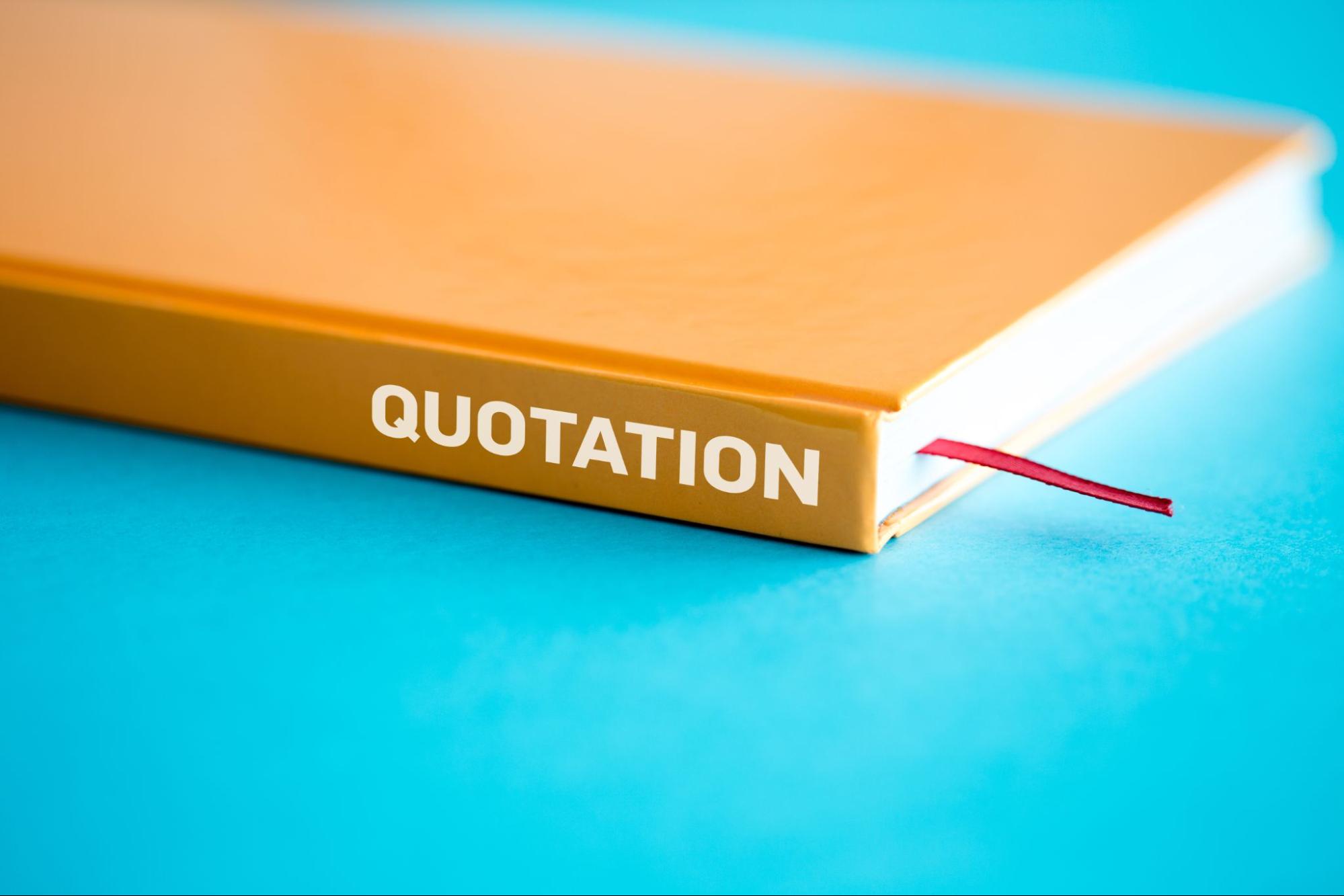
concept art of a book with a yellow hardcover and the word “quotation” in white lettering on the spine

Books and other creative works rarely exist in isolation. Older works often inspire authors, their characters, and the stories that surround them. Many authors also quote a poem, mention a song, reproduce a photograph, or include a short passage from another writer. These references can add context and setting, illustrate an idea, or make a book more engaging, but they can also raise copyright and licensing questions.

Do you need permission to quote song lyrics, poetry, or photos in your book? Usually, yes. The main exceptions are works in the public domain, uses that qualify as fair use, and references that name or describe a work in your own words. Because poems and songs are short, even one line can be too much, and the US Copyright Office says no number of words is automatically safe.

Overview and Goals

Simply naming the original creator or providing a citation does not automatically give you the right to reproduce their work. Using copyrighted material without permission can result in unexpected licensing fees, delayed publication, and the need to remove or revise the material. In some cases, a copyright owner can sue an author.

Fortunately, you do not need permission for every reference to another person’s work. Some works are in the public domain, while certain uses of copyrighted material may qualify as fair use.

Identify any third-party material early, determine whether it is protected by copyright, and decide whether you need permission or can rely on fair use. Taking care of these questions before publication gives you time to obtain any necessary rights, revise your manuscript, or find an alternative if necessary.

This guide serves as an introduction to US copyright considerations for authors. It is general information, not legal advice, and authors with substantial or disputed copyright claims may want to consult a copyright attorney before publishing their book. For a broader introduction, see our guide to understanding copyright protection.

Before quoting or referencing someone else’s work in your manuscript, determine exactly what you want to use and why.

Start by identifying your purpose. Are you analyzing a poem? Discussing the meaning of a song? Reproducing a paragraph to illustrate a historical event? Including an epigraph simply because you like the passage and how it ties into your story?

The purpose of the use can affect the legal considerations, and it also helps you plan permission requests early.

If you know that your book will contain song lyrics, poetry, photographs, artwork, or other copyrighted material, do not wait until the final proof to investigate your rights. Permission requests can take time, and some rights holders may charge a fee or even decline your request.

Your overall priority should be to minimize legal and financial risk while preserving what your book actually needs. Sometimes that means obtaining a license or shortening or changing a quote. Other times, you may be free to use the material simply because it is in the public domain or because your use qualifies as fair use.

When You Do Not Need to Seek Permission

Not every reference to another person’s creative work requires permission. Copyright protects original expression, but it does not prevent authors from making ordinary references to copyrighted works.

Public Domain Works

Works in the public domain are not protected by copyright and generally may be used without obtaining permission. A work enters the public domain when the copyright expires or when copyright law never applied to the original work.

In the US, copyright duration depends on when and how a work was created and published, as well as other factors. Works published in different periods and different countries can be subject to different copyright terms. Special rules may apply to anonymous works, pseudonymous works, and works made for hire. Certain editions, translations, and adaptations of older works can contain new copyrighted material even when the original work is in the public domain.

Because copyright duration can be complicated, do not assume that an older work is automatically in the public domain. When in doubt, search the item’s copyright status through a reliable source, such as the US Copyright Office, before reproducing it.

Song and Movie Titles

Titles, names, and short phrases are generally not protected by copyright. That means you can ordinarily mention the title of a song, movie, book, or other work without asking the copyright holder for permission.

That does not mean every use of a title is automatically free of legal considerations. Trademark law, publicity rights, and other laws can apply in particular circumstances. For ordinary references within a book, however, simply naming a song or movie is different from reproducing its copyrighted content.

Referencing Instead of Reproducing

If you want to discuss another person’s work without reproducing its copyrighted expression, you generally do not need permission. You can identify the song, poem, book, movie, photograph, or other source and discuss it in your own words.

Instead of reproducing an entire poem, for example, you might summarize its central theme and identify the poem and poet. Instead of printing several lines from a popular song, you might explain how the lyrics relate to the subject of your book.

The key is to discuss the work in your own words rather than reproducing its protected expression. This approach may substantially reduce copyright issues associated with reproducing someone else’s creative work.

Fair Use Considerations for Song Lyrics and Poetry

Fair use is a legal exception that permits certain uses of copyrighted works without permission from the copyright holder. Common examples include criticism, commentary, parody and satire, news reporting, teaching, and research. For example, someone reviewing a copyrighted work may be able to share certain lines of dialogue from the book or film.

Intent matters, but so does scope. Although there are no specific rules about how much of a work can be reproduced under fair use, the amount used and whether the excerpt represents an important or distinctive part of the original work are both considerations. A good starting point is to use no more of the work than your purpose requires.

This becomes tricky, however, with poems and song lyrics. Because these works are generally short by nature, even a single line can be considered a substantial portion of the original work.

Courts weigh the four factors in Section 107 of the Copyright Act when deciding whether a use is fair:

  • Purpose and character: What role does the quote play in your book? Are you using the material to criticize, analyze, comment on, or parody the original work, or is it simply for decoration or entertainment?
  • Nature of the copyrighted work: Creative works are strongly protected under copyright law, making their use more difficult to justify than factual material.
  • Amount and substantiality: Are you quoting a portion of the work or the whole piece? What percentage of the whole is the segment you are using?
  • Market effect: Could your use of the work interfere with an existing or potential market for it? Does your reproduction point to or draw away from the original?

If you decide to rely on fair use, document your reasoning. Record what you used, how much you used, why you used it, and how the material contributes to your book. Your analysis does not guarantee that a court will agree that your use is fair, but it gives you a clear record of the decision you made and the factors you considered.

When You Need Permission to Quote Song Lyrics or Poetry

If your planned use of a protected work does not clearly fall within an exception such as fair use, it is a good idea to obtain permission before you finalize and publish your book.

Permission should generally be sought when you want to reproduce substantial portions of a song or poem, particularly when the quotation is being used primarily as decoration or as an epigraph rather than for commentary or criticism.

Full verses, choruses, stanzas, or other substantial excerpts should be treated with caution. Even a short quotation can raise concerns if it contains a particularly important or recognizable portion of a work. The US Copyright Office specifically notes that there is no predetermined number of words or lines that can be safely used without permission.

The more central a quotation is to your book, the more important it is to start the permissions process early. Waiting until publication is approaching can leave you with little time to negotiate a licensing agreement or rewrite the affected sections.

How to Identify the Copyright Holder or Rights Holder

Identifying the correct rights holder can sometimes be more difficult than requesting permission.

Start with any information associated with the original work. For songs, music publishers, performing rights organizations, and other industry databases can help identify songwriters and publishers. ASCAP, BMI, and SESAC may provide useful information about musical works and their rights holders.

For books and poetry, check the original publisher, the author’s representative or estate, and available copyright records. For photographs and other visual works, begin with the photographer, agency, archive, or organization that originally published the image.

The US Copyright Office also maintains public records that can help authors investigate registrations and transfers of ownership. If you cannot identify the copyright holder, do not assume that the work is free to use. Document your search and consider finding an alternative or seeking legal advice.

How to Seek Permission and Draft Permission Requests

When requesting permission to use a copyrighted work in your book, your request should give the copyright owner enough information to understand exactly what you want to use and how you plan to use it.

Your request should include:

  • Your name and contact information
  • The title and author of the work you want to quote
  • The exact excerpt you want to reproduce
  • The word count of the excerpt
  • The title of your book
  • A brief description of your book
  • How the quotation will be used
  • Whether the book will be available in print, digital, or other formats
  • The territories in which you plan to distribute the book
  • Your expected publication date or manuscript status
  • The rights and license term you are requesting

Be specific. A rights holder cannot meaningfully evaluate a request for “a few lines from the song” without knowing which lines you intend to use and how you intend to use them. If you have already written the passage into your book, you can include that section as an excerpt in your request as well.

When appropriate, request nonexclusive rights rather than exclusive rights. You generally need permission to reproduce the material in your book, not ownership of the underlying work itself or exclusive usage.

Negotiation, Fees, and Publisher Responsibilities

Getting permission to use another person’s creative work does not necessarily mean you can use it for free.

A rights holder may grant permission without charge, request a licensing fee, impose conditions on the use, limit the formats or territories covered, or decline the request entirely. The cost can vary considerably depending on the work and the requested use.

If your book depends on third-party material, build potential permission costs into your publishing budget before you commit to the material. Also allow several weeks, or longer when necessary, for rights holders to respond.

If you are working with a publisher, ask whether the publisher has a standard permissions form or specific requirements. Publishers may have their own procedures for documenting permissions and reviewing third-party materials. Many publishing agreements also ask the author to confirm that all third-party material is cleared, so read yours with care. Our guide to vetting a publishing contract covers what to look for before you sign.

Do not assume that sending a permission request is the same as receiving permission. Before publication, obtain the written license or approval and make sure it covers the actual use you intend to make.

If You Cannot Find or Obtain Permission

Sometimes you cannot locate a rights holder, or they deny permission. An unsuccessful search does not automatically make a copyrighted work free to use.

Document your good-faith efforts to identify and contact the rights holder, including the databases, publishers, organizations, and other sources you searched.

Then consider alternatives. You may be able to:

  • Remove the quotation.
  • Paraphrase the underlying idea in your own words.
  • Replace the material with a public domain or Creative Commons alternative.
  • Rewrite an epigraph or chapter heading.
  • Revise the passage so that any quotation is truly needed for commentary or criticism, which supports a fair use argument.

Creative Commons material can provide useful alternatives, but “Creative Commons” does not mean no restrictions. Different licenses impose different requirements involving attribution, commercial use, adaptations, and other conditions. Review the specific license before using the material.

Special Rules for Images, Photos, and Other Media

Photographs, illustrations, artwork, screenshots, and other visual material should be treated with the same care you would give written quotations.

Finding a photo online does not mean you have permission to reproduce it. Copyright protection can apply to photographs and other visual works even when they are freely accessible online.

Before including an image in your book, determine:

  • Who owns the copyright?
  • What license or permission applies?
  • Does the license permit use in a commercial book?
  • Does it permit print and digital distribution?
  • Are attribution requirements involved?
  • Are modifications or cropping permitted?
  • Are there restrictions on territory or distribution?

Stock photography can simplify this process, but read the specific license requirements before assuming you can use a stock image for any purpose. If an identifiable person appears prominently in a photograph you plan to use commercially, a model release or other permission may be needed for your intended use.

Creative Commons images can also be useful. A CC BY license permits commercial use and adaptation as long as the required attribution is provided. Other Creative Commons licenses may restrict commercial use or prohibit adaptations.

Sample Permission Request Outline

A simple permission request might follow this structure:

Subject: Permission Request for Quotation in [Book Title]

Dear [Rights Holder],

My name is [Author Name], and I am the author of [Book Title], a [brief description of the book]. I am requesting permission to reproduce the following material from [Original Work Title] by [Creator]:

Exact excerpt:
“[Quoted material]”

Word count: [Number]

I would like to use this excerpt in [chapter/section/page description] of my book, where it will [briefly explain its purpose].

I am requesting non-exclusive rights to reproduce the excerpt in print and electronic editions of the book, distributed [territories], for the term of copyright or the longest license term you are able to grant.

The manuscript is currently [in progress/complete/in production], with anticipated publication in [month/year].

Please let me know whether you control these rights and whether there are any fees or additional conditions associated with permission.

Thank you for your consideration. I can be reached at [email address] or [phone number] if you need any additional information.

Sincerely,
[Author Name]

If a publisher or licensing agency provides its own permission form, use that form instead. Always adjust to the rights holder’s requirements to increase your chances of a positive response.

Legal Risk Management and Recordkeeping

Managing permissions is easier when you treat it like part of your book’s production records rather than an informal collection of emails.

Create a permissions file for your manuscript that includes:

  • Copies of all permissions requests
  • Responses from rights holders
  • Signed licenses and agreements
  • License fees and payment records
  • Dates permissions were granted
  • Specific excerpts or images covered by each permission
  • Approved formats and territories
  • Attribution or credit requirements
  • Expiration dates and other limitations
  • Notes about any fair use analysis you performed

Make sure the final license actually matches the way you plan to publish the book. A license specifically covering a print edition may not necessarily cover every other format or use. Some licenses also require a specific credit line, which authors often place on the copyright page. Our guide to what goes on a book’s copyright page shows where permissions and credits fit.

If a rights holder disputes your use, or if the material is particularly valuable or legally sensitive, consult an intellectual property attorney rather than trying to resolve the dispute yourself.

Quick Pre-Publication Checklist

Before sending your book to production, take the time to review every piece of third-party material as well as its corresponding records. One final check can help ensure that you do not overlook potential copyright issues that could result in a dispute or delay publication.

Use the following checklist to review your book before publication:

  • Confirm the copyright status of each poem, lyric, photograph, or other work you reproduce.
  • Determine whether your use requires permission or may qualify for an exception such as fair use.
  • Obtain written permission for material that requires a license.
  • Verify that image licenses cover your intended print and digital uses.
  • Confirm any required model releases or other permissions for identifiable people.
  • Check attribution requirements for Creative Commons and other licensed material.
  • Make sure licenses cover the territories, formats, and distribution methods you plan to use.
  • Keep copies of permissions and licenses with your publishing files.
  • Prepare replacement text or images in case permission is denied or unavailable.
  • Tell your publisher about any unresolved permissions before publication.

Third-party material can add considerable value to a book, but it should not become a last-minute legal problem. Identify what you want to use early, investigate the rights involved, and keep careful records. When permission is necessary, obtaining it before publication gives you one less problem to solve when your manuscript is ready to become a book.

Frequently Asked Questions About Quoting Other Works in a Book

Can I quote song lyrics in my book without permission?

Usually not, unless the lyrics are in the public domain or your use qualifies as fair use. Song lyrics are short, so even one line can be a substantial part of the work, and quoting lyrics as decoration or as an epigraph is the hardest use to justify. If you want the lyrics, request written permission from the rights holder, or describe the song in your own words instead.

How many lines of a poem or song can I quote?

There is no number of words or lines that is automatically safe. The US Copyright Office notes that no specific number of words, lines, or notes may safely be taken without permission. The amount matters, but so does whether the excerpt is an important part of the work and why you are using it.

Do I need permission to mention a song or movie title?

Generally no. Titles, names, and short phrases are not usually protected by copyright, so you can name a song or movie in your book. Naming a work is different from reproducing its lyrics, dialogue, or images, and trademark or publicity laws can apply in some situations.

Can I use a photo I found online in my book?

Not without checking the license. A photo can be protected by copyright even when it is freely visible online. Find the owner, confirm the license covers commercial print and digital use, and follow any attribution rules. Stock photos and Creative Commons images can work, but read the specific terms first.

Does giving credit or a citation count as permission?

No. Naming the creator or providing a citation does not give you the right to reproduce a copyrighted work. Credit is often required in addition to permission, but it does not replace it.

What if I cannot find the copyright holder, or they say no?

An unsuccessful search does not make the work free to use. Document your search, then remove the quotation, paraphrase the idea in your own words, or replace the material with a public domain or properly licensed alternative.

Ready to Publish Your Book?

Permissions work goes much more smoothly when it is finished before production begins. Every Page Publishing author works with a dedicated Publication Coordinator from signing through publication, a single point of contact who knows your manuscript and can answer your questions along the way. Raising any quoted lyrics, poems, or photos with that person early helps permissions questions come up before production rather than after.

If you are considering publishing your book, you can see what is involved in our breakdown of what it costs to publish with Page Publishing.

Questions about publishing a book that quotes other works? Call a Page Publishing consultant at +1 (800) 204-6099 to talk through your plans.

Four Stages of the Book Editing Process

Four Stages of the Book Editing Process

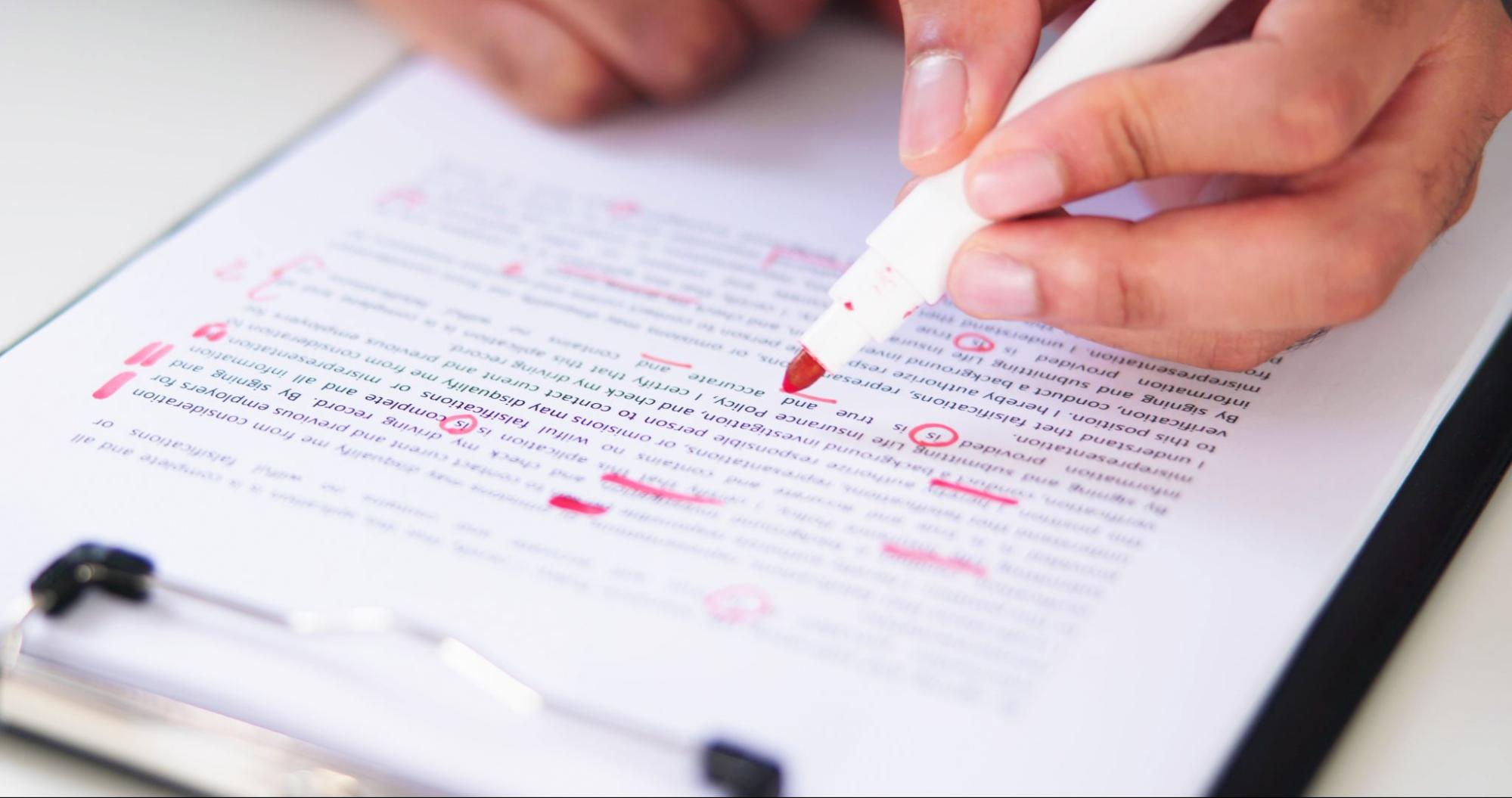
Close-up of a hand holding a red pen over a manuscript page on a clipboard, ready to proofread.

You did it: after months, or perhaps even years, of writing, rewriting, and staring at the same pages, you have finished your book. You might even have typed “the end” with a dramatic flourish or, at the very least, let out a satisfied sigh.

You should be proud; finishing a book’s first draft is a major accomplishment. However, it is only the beginning of the publishing process. A book that looks complete to the author can have plot holes, uneven pacing, confusing passages, inconsistent details, or simple spelling and punctuation errors. Because you have spent so much time with your own words, it can be surprisingly difficult to spot those problems yourself.

That is where editing comes in. Professional book editing is an important part of preparing your book for publication. But it is not just a single pass through your manuscript to make sure your i’s are dotted and your t’s are crossed.

Overview: What the Book Editing Process Covers

Book editing happens in four stages, each with a different focus and perspective. These stages include developmental editing, line editing, copyediting, and proofreading. The process starts with the biggest questions about your book’s story, structure, and purpose, then gradually narrows its focus until every sentence, word, and punctuation mark has been reviewed.

Understanding these four stages can help you determine what your manuscript needs, when you need it, and when to invest in a professional editor to turn your draft into a polished, publication-ready manuscript.

The four stages of book editing each serve a different purpose, moving from big-picture revisions to final technical checks:

  • Developmental editing: Examines high-level concepts in your book, including structure, plot, themes, character development, pacing, and overall effectiveness.
  • Line editing: Focuses on the writing itself, refining word choice, sentence structure, flow, tone, and voice to make each page clear and engaging.
  • Copyediting: Checks the manuscript for grammar, punctuation, spelling, syntax, consistency, and adherence to the chosen style.
  • Proofreading: Provides a final review of the formatted book, catching remaining typos, formatting issues, and other errors before publication.

Every author can benefit from professional editing. Even authors who are highly skilled at editing other people’s work need an outside perspective to identify issues or errors that they may have missed.

Authors are often too close to their own work to see every potential flaw. It is common to overlook plot holes and inconsistencies because an author’s mind naturally fills in the details that may be missing from the page.

While friends, family, and beta readers can offer valuable perspectives that help improve a manuscript, they are not editors. A professional editor brings specialized experience and an objective view to your book.

When you are planning your book editing timeline, consider when feedback from editors and beta readers will be most useful. Some authors bring in beta readers before a developmental editor gets involved. This lets them save money by identifying and fixing plot holes and structural issues before professional editing begins. Others, however, prefer to wait until after developmental editing, bringing the book closer to its finished state before sharing it with readers.

Stage 1: Developmental Editing for Big-Picture Work on the First Draft

Developmental editing is the first major stage of the editing process. Instead of focusing on individual sentences or grammar, developmental editing looks at the book as a whole. A developmental editor considers a book’s structure, plot, overall themes, character arcs, pacing, and scene progression.

For fiction, developmental editing may examine:

  • Plot: Does the story have a clear and compelling progression? Are there gaps, contradictions, or unresolved threads?
  • Character development: Do the characters have believable motivations and meaningful arcs? Do their choices make sense within the story?
  • Pacing: Does the story move at an appropriate pace, or are there sections that feel rushed or unnecessarily slow?
  • World-building: Is the world of the story developed consistently and clearly enough for readers to understand it?
  • Structure: Are the chapters, scenes, and major story beats arranged in a way that supports the overall narrative?
  • Point of view: Is the chosen perspective effective and consistent?
  • Emotional payoff: Do the story’s major moments feel earned, and do they deliver the emotional impact the author intends?

For non-fiction, developmental editing may focus on:

  • Structure: Is the information organized logically, and does each section contribute to the overall purpose of the book?
  • Themes: Are the book’s central ideas developed consistently throughout?
  • Thesis or central argument: Is the main idea clear, supported, and carried through the manuscript?
  • Clarity: Can readers easily understand the author’s ideas and follow the progression of the book?
  • Voice: Does the author’s perspective and writing style remain appropriate and consistent for the subject and intended audience?

A developmental edit does not worry about grammar, punctuation, or spelling. It is not particularly helpful to perfect a sentence that may be deleted, rewritten, or moved to another part of the book. You address those concerns later in the editing process.

That is also why it is important to hire a professional editor with specific developmental editing experience. An editor who is great at spotting an extra comma or suggesting a better word choice may not have the same ability to improve your novel’s pacing or identify a weak plot.

The goal of developmental editing is to make sure the foundation of your book is strong before moving on to the more detailed stages of book editing. If you are still shaping your story, our guide to outlining a novel can help you build that foundation.

Stage 2: Scene-Level Work and Line Editing for Stronger Pages

Once the overarching themes and structure of your book are working, the next stage in editing is to consider each scene and line of text individually.

Scene-level edits examine the purpose and effectiveness of each scene or situation in your book. They look at how a scene advances the plot, develops the book’s ideas, and contributes to its overall pacing and structure. Each scene should have its own purpose and momentum, with a clear beginning, turning point, and ending, while also serving the larger story.

Many scenes also establish “stakes” for the characters. Stakes are what a character stands to gain or lose because of their actions. They give both characters and readers something to care about and a reason to keep going. Strong scenes connect those stakes to the larger story, giving each scene a clear purpose.

Line editing, another central part of this stage, focuses on word choice, sentence structure, and flow. It helps ensure that sentences are clear, effective, easy to follow, and carry the reader forward. Line editing also helps to ensure a consistent tone throughout the manuscript while shaping and preserving the author’s creative voice.

While a developmental editor may also provide feedback on individual scenes, a professional line editor is often best suited to shape each sentence to support the overall plot and storylines. A line editor can identify unnecessary repetition, awkward phrasing, unclear passages, weak word choices, and other issues that may keep otherwise strong writing from reaching its full potential.

If you make major changes during this phase, it can be helpful to re-engage beta readers for another review. Their feedback can help you determine whether the revisions improved the reading experience and whether the changes introduced any new issues.

The goal of this stage is to make sure each scene and passage is contributing to the book as a whole, while also ensuring that the writing itself is clear, engaging, and consistent. In the next stage, copyediting, the focus shifts from the writing’s effectiveness to its technical accuracy and consistency.

Stage 3: Copy Editing for Technical Fixes Across the Entire Book

Copyediting is one of the final phases of book editing and focuses on grammar, punctuation, syntax, spelling, and consistency. Copyediting helps ensure your book follows a desired style and stays consistent from the first page to the last.

For example, if you have a character named Ashley, the copyediting process would confirm that the name is spelled the same way throughout your book, rather than switching to Ashlee or Ashleigh partway through.

Some aspects of copyediting overlap with line editing, particularly when it comes to word choice and tone. But while line editing allows more creativity and influence, copyediting focuses on practicality: accuracy, consistency, and tone. The copyeditor’s job is to make sure that every word and sentence makes sense, follows the appropriate style (such as the Chicago Manual of Style), and fits within the larger context of the manuscript.

Because these two types of editing require different skills and approaches, some authors choose to work with a professional copyeditor separate from their line editor.

Copyeditors may also review formatting to ensure consistency throughout the manuscript. This can include checking headings, spacing, capitalization, numbers, citations, and other recurring elements according to the book’s established style.

The goal of copyediting is to create a technically accurate, consistent manuscript that is ready for a final proofread before publication.

Stage 4: Proofreading and Final Polish Before Publication

While editing aims to eliminate errors, changes to the plot, scenes, and sentences can also introduce new typos or inconsistencies. Proofreading is the final editing stage before publication. It offers one last opportunity to identify and correct those errors before your book goes to print.

Proofreading is often best completed using the final PDF or ebook proof, ensuring that the proofreader is reviewing the version of the manuscript that your readers will ultimately see.

Proofreaders should look for:

  • Spelling: Misspelled words, names, and numbers, typos, and misused homonyms such as there, their, and they’re.
  • Punctuation: Missing commas and periods, punctuation errors, and correct placement of apostrophes and quotation marks.
  • Grammar: Subject-verb agreement, capitalization, dangling modifiers, and pronoun usage.
  • Formatting: Consistent fonts, spacing, and citation formats.

Some proofreaders read text backward, going word by word from the end to the beginning. This helps them focus on individual words and sentences rather than becoming absorbed in the meaning or context of the book. Reading aloud can also help proofreaders to spot missing words, awkward phrasing, and run-on sentences that need to be broken up.

These final checks matter if you want to present a professional publication that readers, booksellers, and librarians will want to buy.

Workflow: How To Run the Book Editing Process

When editing your book, follow the book editing stages in sequential order.

Proofreading before you have corrected major plot points, for example, will only lead to frustration and unnecessary work down the line. Starting with developmental editing and ending with proofreading allows you to follow a natural progression from the big picture to tiny details.

At each stage, you will want to create a revision plan. Decide whether you will address issues throughout the manuscript all at once or work through them in smaller sections. Consider the expected timeline for your editor’s review and the amount of time you will need for your own revisions. When working with a professional editor, make sure that you are both on the same page about timing and expectations to help the process go more smoothly.

Always leave extra time in your schedule. After completing your first draft, many authors find it beneficial to set it aside for a while before beginning the editing process. Letting your draft rest before editing can give you enough distance to see your work more objectively. This is especially important if you choose to self-edit your book, but can also be beneficial when working with professional editors.

Hiring and Collaborating With a Professional Editor

While many self-published authors choose to self-edit, hiring a professional editor brings specialized expertise and a fresh perspective that can elevate your book beyond what you may achieve alone. Professional editing can be a worthwhile investment in your book’s quality, publication-readiness, and even long-term success.

Always consider how an editor’s skills would be best used, especially if resources are limited. Our look at what DIY self-publishing actually costs can help you see where editing fits in your budget. If you are struggling to finalize or clarify the plot or pacing of your novel, you may want to focus on developmental editing. Some authors engage beta readers before this stage, getting valuable feedback from potential readers to help them simplify the developmental editing process.

Once you have narrowed down your list of potential editors, request a sample edit. This should be a paid exercise, giving each candidate a small sample of your manuscript and asking them to edit it. Using the same sample for multiple editors allows you to compare the editor’s style, notes, and feedback so you can choose the one that best aligns with your goals.

It is also helpful to clearly define your book and your big-picture goals before looking for an editor. Knowing your book’s ideal audience, where you hope to sell it, and a quick summary of the plot or thesis can help you find the right editor for your manuscript.

Beta Readers and Self-Editing: Prep Before Professional Editing

While beta readers are not editors, they often play an important role in the editing process. Some authors engage beta readers right before publication, when the book is nearly finished. For many self-published authors, beta readers are most valuable early in the editing process, before engaging a professional editor.

Beta readers review a draft manuscript and provide feedback from a reader’s perspective. Early beta readers may include friends, family, or fellow writers from local and online writing groups. They are typically not paid, though some services connect authors to beta readers for a fee.

Beta readers often offer candid feedback that identifies plot holes, flaws in character arcs, confusing sections, and points where they lost interest. This insight often helps authors prioritize revisions and address glaring issues before professional editing begins. Authors can also use beta feedback to prioritize developmental edits by asking an editor to focus on their biggest concerns.

If you are using beta readers early in your process, the key is to be upfront about the state of your draft. It is also helpful to give readers specific guidance about what you are looking for, whether that is feedback on pacing, plot, character development, or scene-level concerns.

The more specific your questions are, the more useful beta-reader feedback is likely to be. Rather than simply asking whether a reader liked the book, ask where they got confused, whether the pacing held their interest, or whether a character’s actions and motivations made sense.

While this feedback cannot replace the expertise of a professional editor, it can help you identify areas that need the most attention before your manuscript moves to the next stage of the process.

Final Checklist: Confirm Final Polish and Readiness

The goal of editing is to move your manuscript from a first draft to a polished, publication-ready document. When the editing process is complete, your book should go to print with a well-formed structure, good character development, clear themes, and as few errors as possible.

Here is a final checklist to make sure your book is ready before you send it to print:

  • Export your book: Export the manuscript as an EPUB or print-ready PDF for final review.
  • Confirm copy edits: Make sure that all copy edits have been implemented throughout the manuscript.
  • Proofread the formatted file: Complete a final proofread on the formatted version of your book.
  • Check consistency: Check the entire book for consistent spelling, capitalization, and formatting, names, terminology, or other recurring elements.
  • Review supporting files: Check corresponding documents, such as cover files and title, copyright, and acknowledgment pages.
  • Cross-check citations: Review any in-text citations to ensure they are complete, accurate, and consistent.

Once your review is complete, congratulations. You are now ready to publish your book.

Frequently Asked Questions About Book Editing

What are the four stages of book editing?

The four stages are developmental editing, line editing, copyediting, and proofreading. They move from big-picture concerns such as structure, plot, and pacing, to sentence-level style, to grammar and consistency, and finally to a last check of the formatted book for any remaining errors.

What is the difference between line editing and copyediting?

Line editing focuses on how the writing reads: word choice, sentence structure, flow, tone, and voice. Copyediting focuses on technical accuracy and consistency: grammar, punctuation, spelling, syntax, and adherence to a chosen style. Because the skills differ, some authors work with separate editors for each stage.

Does every book need all four stages of editing?

Every manuscript benefits from an outside review, and each stage catches problems the others do not. Your budget and the state of your draft may affect which stages you prioritize. An author who is struggling with plot or pacing may start with developmental editing, for example. Talk through your goals with a prospective editor so you can decide together what your manuscript needs.

Should I use beta readers before or after developmental editing?

Either approach can work. Some authors use beta readers first to identify plot holes and structural issues, which can reduce what a developmental editor needs to address. Others wait until after developmental editing so readers see a draft closer to its finished state. Our post on why skipping a beta reader is a common writing mistake explains what they can add.

How much does professional book editing cost?

Costs vary based on the editor, the length and genre of your manuscript, and the level of editing needed. The Editorial Freelancers Association rate chart can help you set expectations. To see how editing fits into a full publishing budget, read our breakdown of what it costs to publish with Page Publishing.

Can I edit my own book?

You should revise your own work before it goes to anyone else, but authors are often too close to their writing to catch every issue. Setting the draft aside for a while gives you more distance. Self-editing works best as preparation for professional editing rather than a replacement for it. For practical steps, see our guide to self-editing your book.

Ready to Publish Your Book?

Editing is the stretch of the publishing journey where a good draft becomes a book that is ready for readers. Take it one stage at a time, give each stage the time it needs, and trust that the care you put in will show on the page.

You can see how editing fits into the larger process in our guide to publishing print and digital books with integrated editing.

Wondering what editing and publishing would look like for your manuscript? Call a Page Publishing consultant at +1 (800) 204-6099 to talk through your options.